

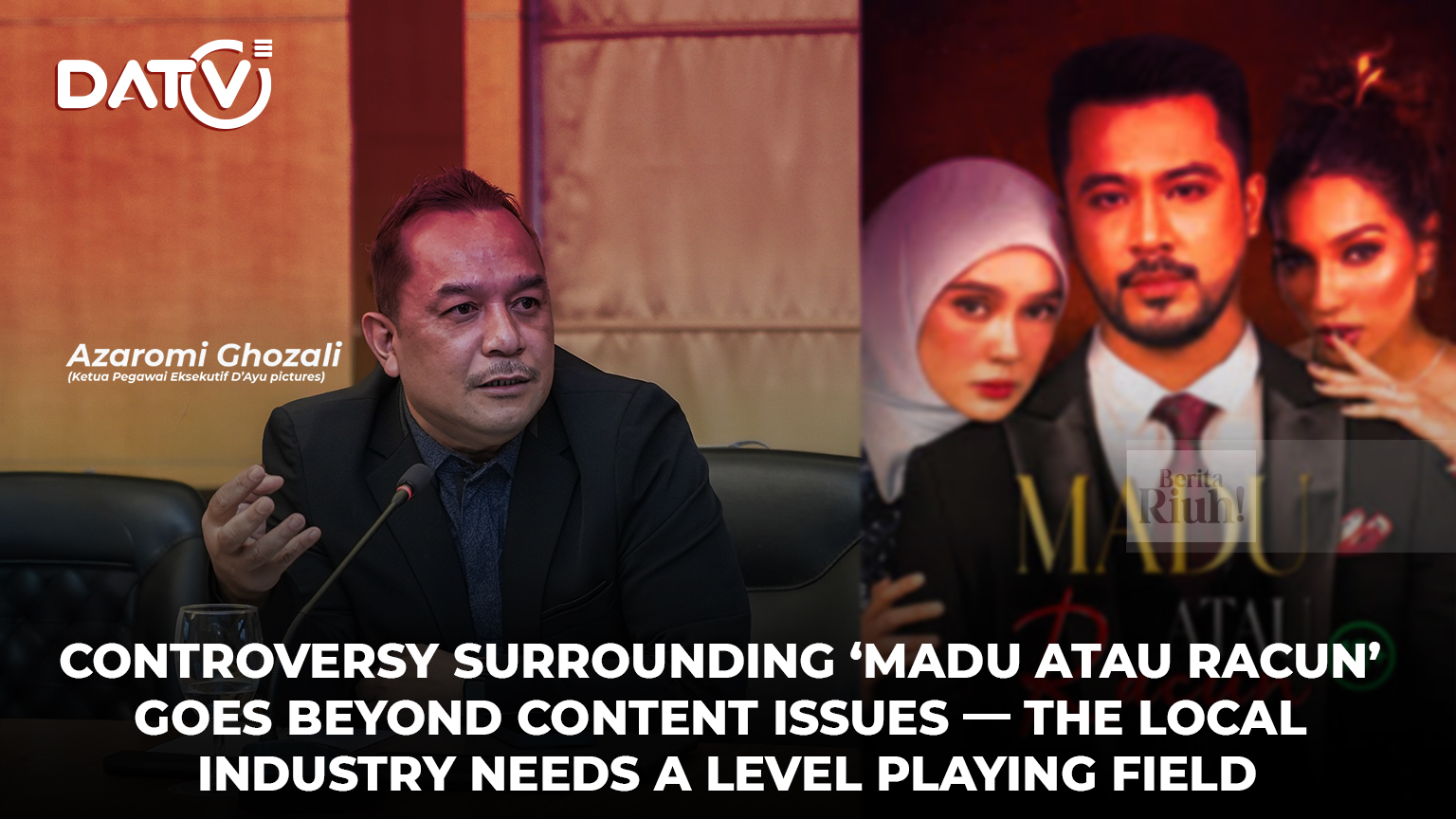
CONTROVERSY SURROUNDING ‘MADU ATAU RACUN’ GOES BEYOND CONTENT ISSUES — THE LOCAL INDUSTRY NEEDS A LEVEL PLAYING FIELD
The controversy surrounding the drama Madu Atau Racun, particularly its sensitive content, should not end with blame being placed on the producer, cast, crew or the National Film Development Corporation Malaysia (FINAS). Instead, it should spark a broader discussion on the regulation of over-the-top (OTT) content and the future of the local creative industry.
Azaromi Ghozali, Chief Executive Officer of D Ayu Pictures Sdn Bhd, said the public has every right to voice concerns over content involving sensitive multiline cultural, religious or social issues. However, criticism should be based on accurate information and a clear understanding of the roles and jurisdictions of the relevant parties.
“I understand why people are upset. I also acknowledge that content of this nature is concerning. However, before placing blame on anyone, we must first understand who is actually responsible. FINAS and the Film Censorship Board of Malaysia (LPF) have distinct roles and responsibilities, and neither should be made a convenient target.”
According to Azaromi, the rapid growth of OTT platforms has transformed the content industry landscape, giving audiences access to a wide range of content through streaming platforms.
He said this development requires the government to review the regulatory mechanisms for OTT content so that clear guidelines are provided to platforms, broadcasters and industry practitioners.
“We cannot wait for content to go viral before everyone scrambles to respond. The guidelines should already be in place.”
“I propose that the government establish National OTT Guidelines to clearly define what content may be offered to Malaysian audiences, how it should be classified and the responsibilities of the platforms that carry it.”
At the same time, he said OTT platforms must also assume responsibility through self-regulatory measures such as age classifications, content warnings, parental controls, review processes and complaint channels.
“We do not want to restrict OTT platforms or stifle creativity. We want OTT platforms to uphold the responsibilities and principles of Malaysian broadcasting laws. If a platform serves as a channel for delivering content to Malaysian society, its level of responsibility must be proportionate to its influence.”
Local industry faces an uneven playing field
Azaromi said the OTT issue must also be viewed from the perspective of the local industry’s sustainability, as it now faces intense competition for audiences’ attention.
He said some OTT content is able to offer bolder and more extreme elements, while local producers and broadcasters operate within a different set of guidelines.
“We must honestly acknowledge that OTT platforms are major competitors to local broadcasters. Audiences have a much wider range of content to choose from, some of which is more extreme.”
“The question is, how can local industry players continue to compete when the playing field is uneven? I am not saying that we need to produce extreme content like that found on OTT platforms. However, the rules and responsibilities must be clear and fair to all parties.”
He also advised producers, actors, directors and crew members to exercise greater caution when considering content offers by taking into account not only the payment and popularity involved, but also the potential impact on society.
Azaromi also urged netizens not to turn the controversy into a battleground on social media.
“What matters most is that we use this issue to improve the system, rather than merely looking for someone to blame.”
He stressed that the Madu Atau Racun controversy should serve as an opportunity for all parties to improve the country’s content ecosystem.
“Today, we are discussing one drama. Tomorrow, it may be another. If we continue waiting until content goes viral, we will always be too late.”
“We do not want this issue to end with FINAS being blamed, producers being condemned and artists being attacked. After a few days, the issue dies down and we forget about it, until the same controversy happens again.”
“We do not want restrictions. We want fairness, accountability and a level playing field for all.”
— END—
Issued by:
Azaromi Ghozali
Chief Executive Officer
D Ayu Pictures Sdn Bhd
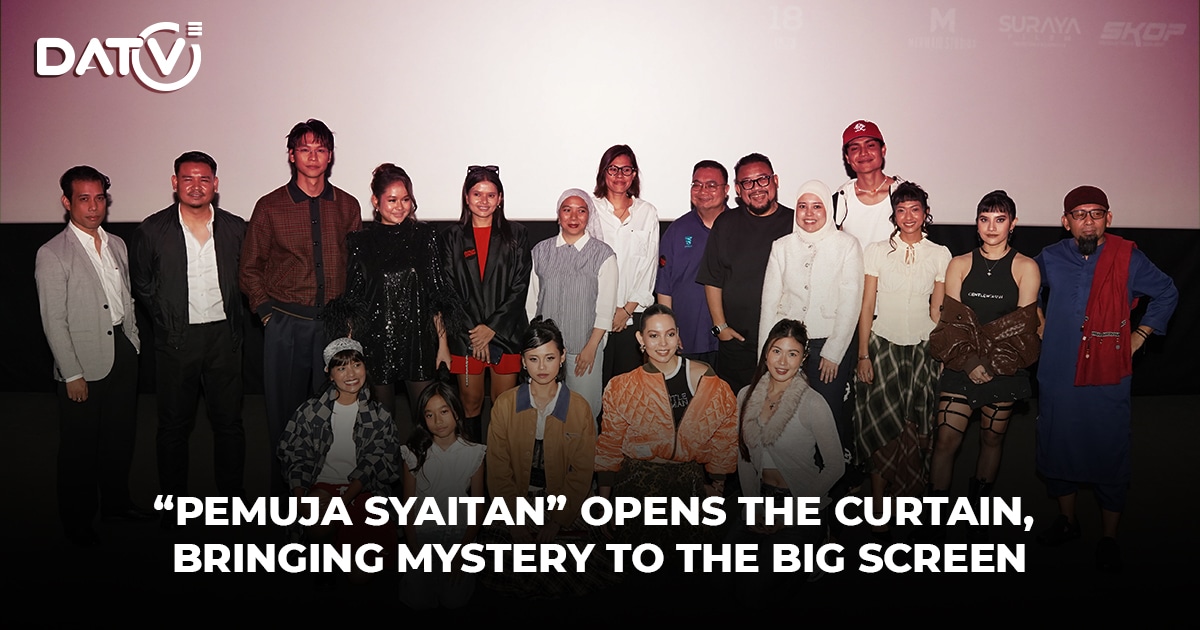
Official Launch Introduces Cast Line-Up, Official Poster and Teaser Trailer to the Public
Kuala Lumpur, 15 September 2026 – Something terrifying awaits audiences in the latest horror film, Pemuja Syaitan,

KAYANGAN PREMIERES “HIKAYAT NUSANTARA” Bringing the Stories, Flavours and Culture of the Nusantara to Life
ANEKA WALK, SHAH ALAM, 4 September 2026 — Kayangan, a new cultural dining experience celebrating the rich
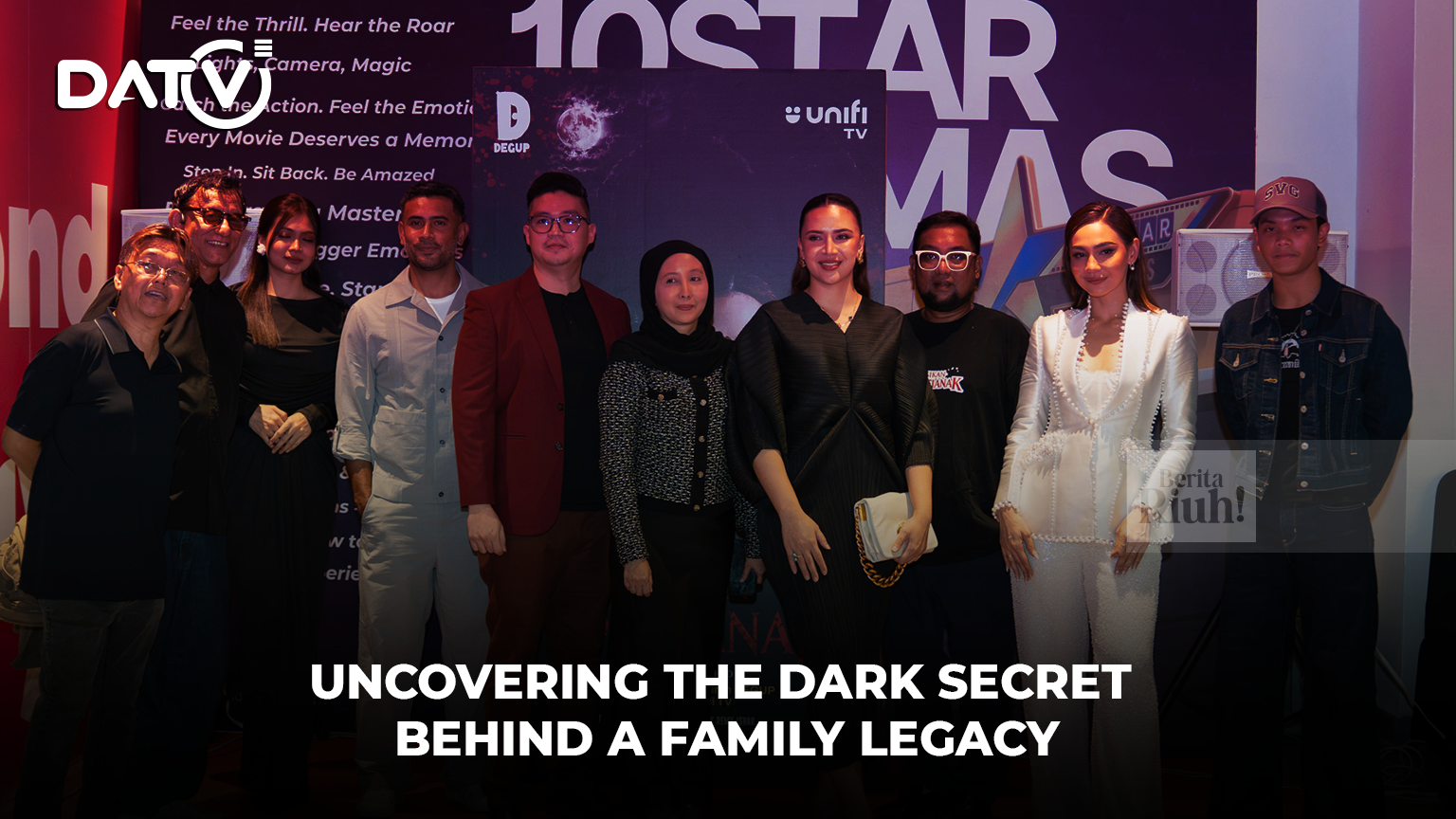
“BISIKAN PONTIANAK” TAKES VIEWERS INTO A TERRIFYING TALE FILLED WITH MYSTERY AND THE SECRETS OF AN ANCIENT LEGACY.
Kuala Lumpur, August 2026 - Viewers are set to experience a mystery-filled horror production through BISIKAN PONTIANAK,